Antique 49 State Embroidered Quilt
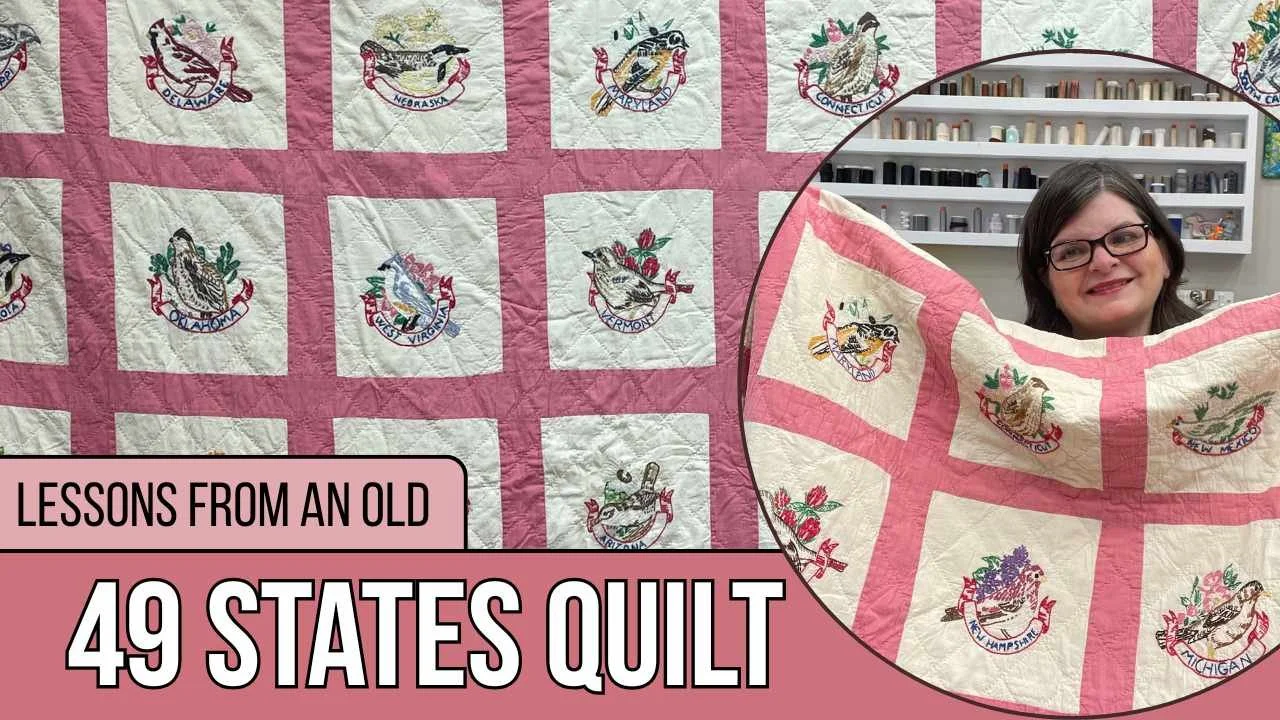
To watch the video, click HERE or on the image above.
About This Old Quilt
Every antique quilt tells a story, but some carry an entire chapter of history stitched into their fabric. If you’ve been following my channel for a while, you know that certain rare textile treasures occupy a permanent spot on my ultimate quilting bucket list. Today, I am absolutely thrilled to share that I finally tracked one down, and it is everything I hoped it would be.
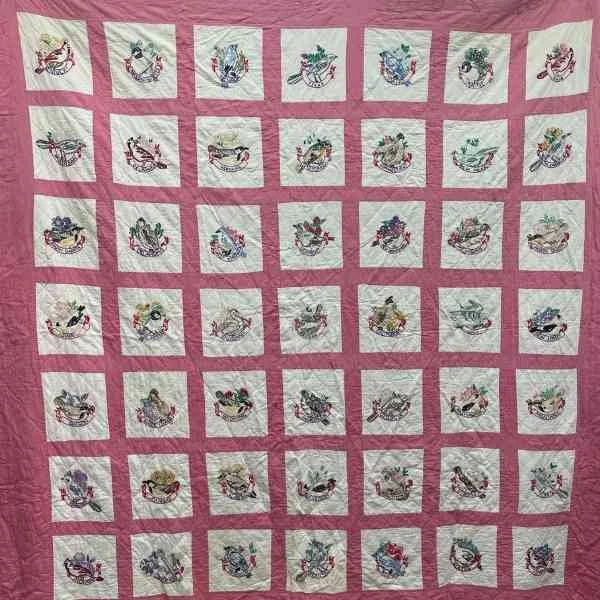
In this week's feature, we are unrolling a spectacular antique United States embroidered quilt. This remarkable piece showcases 49 intricately hand-embroidered blocks, each dedicated to a single state in the Union at the time of its creation. Complete with the state names, official birds, and state flowers, it’s an incredible snapshot of mid-century American history.
But the historical charm is just the beginning. From a maker's perspective, this quilt is a masterclass in classic craftsmanship. We're going to dive deep into its beautiful hand quilting, the vibrant bubble-gum pink sashing that beautifully frames each block, and a highly unique knife-edge binding technique that instantly caught my eye.
Grab a cup of tea and join me as we take a closer look at this spectacular piece, exploring both its stunning visual details and the timeless lessons it leaves behind for modern quilters.
Details-At-A-Glance:
Size: 80.5” x 82”
Age: Unknown; the best guess is it was finished after January 1959 because Alaska became at state on January 3, 1959
Acquired: I purchased it at a library fundraiser.
Quilt History: This was donated to the library.
Construction Technique: The hand-embroidered blocks, sashing, and borders are added by machine.
Sashing: The sashing is 2” wide.
Borders: There are borders 7” borders on each side of this quilt.
Quilting: Quilted completely by hand; there is a diagonal cross-hatch pattern quilted in the blocks and sashing. In the borders, there is a wave design.
Fabric: Cotton; Pink for the sashing, borders, and backing; the blocks are embroidered onto a muslin fabric.
Batting: Cotton sheet
Binding: Knife Edge
Backing: Pink; same as the sashing and borders
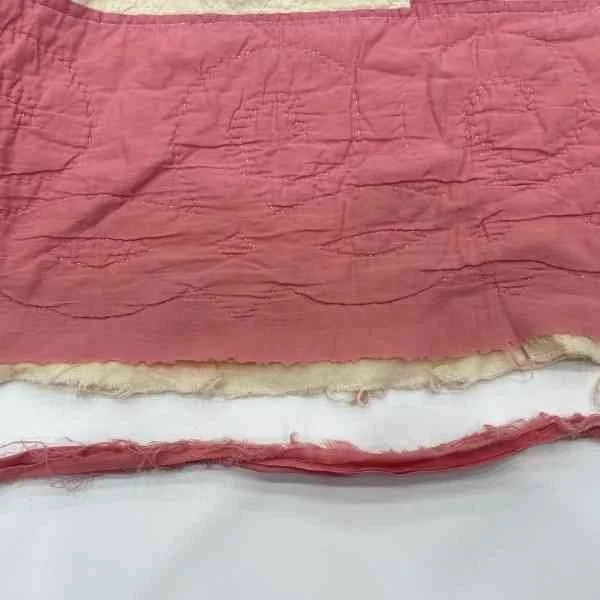
Condition: Overall, good. The binding treatment is worn and detached at the top of the quilt.
This Incredible Quilt!
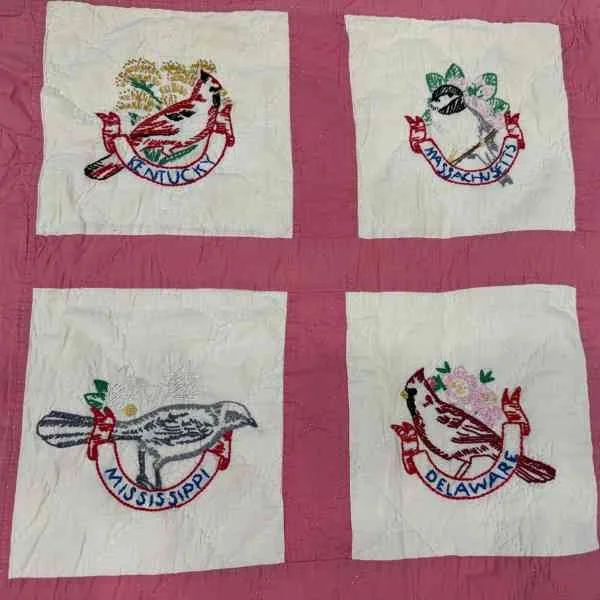
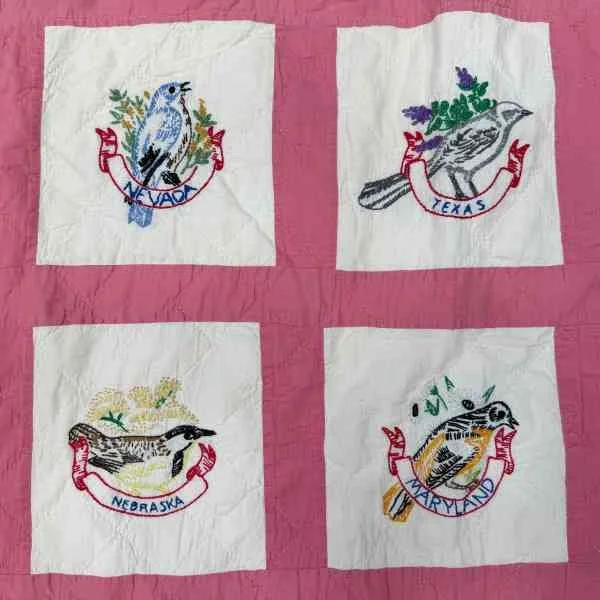
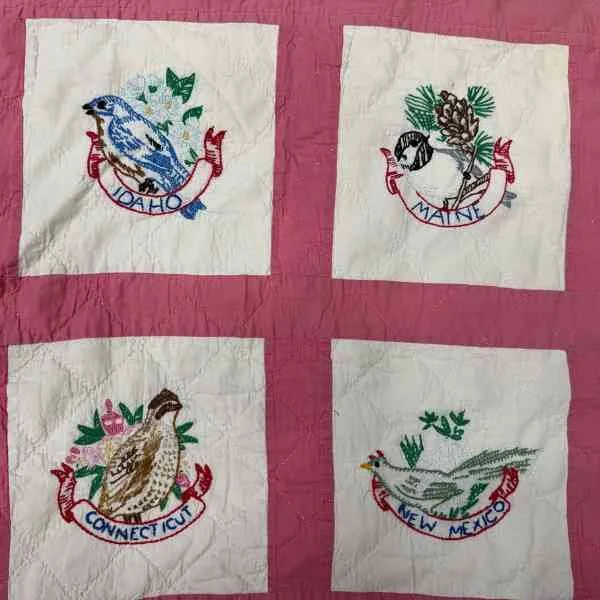
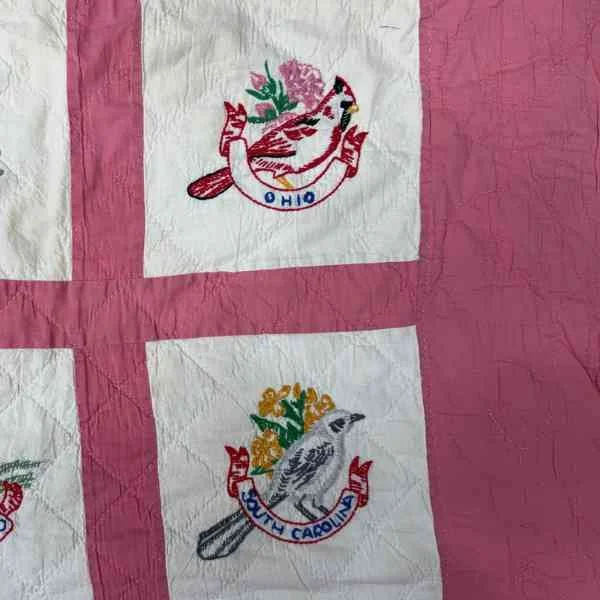
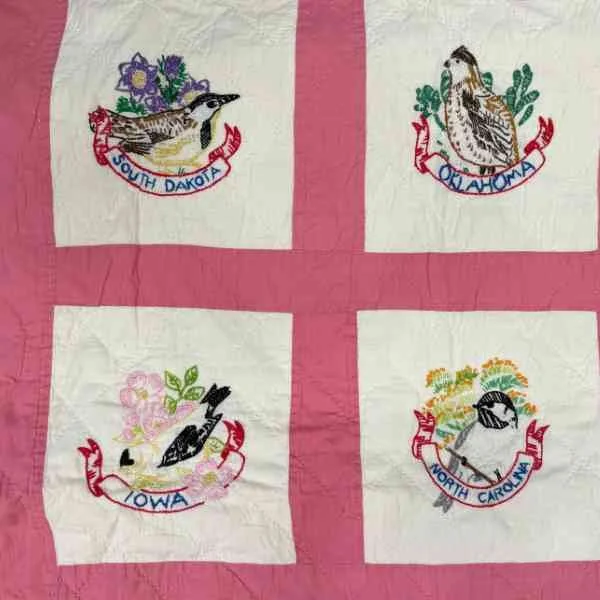
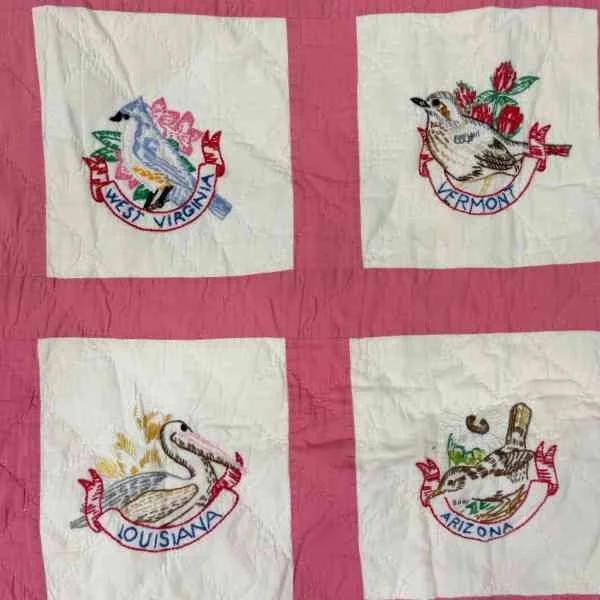
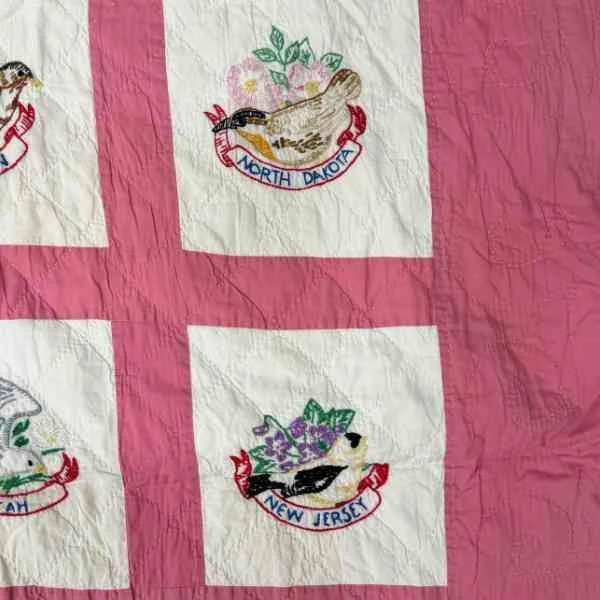
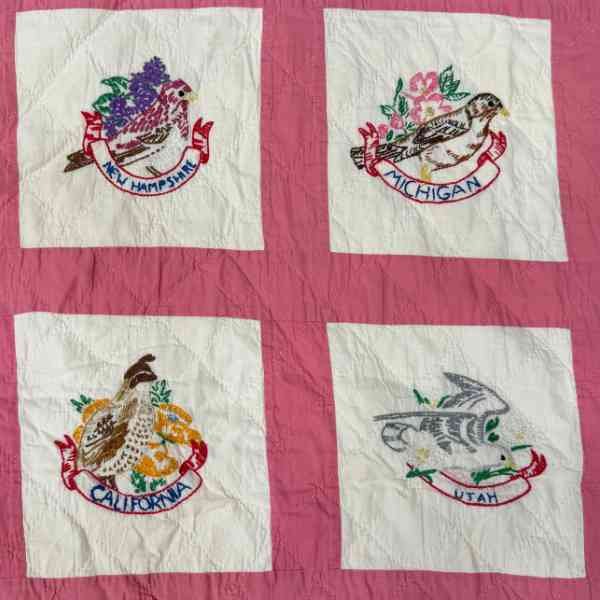
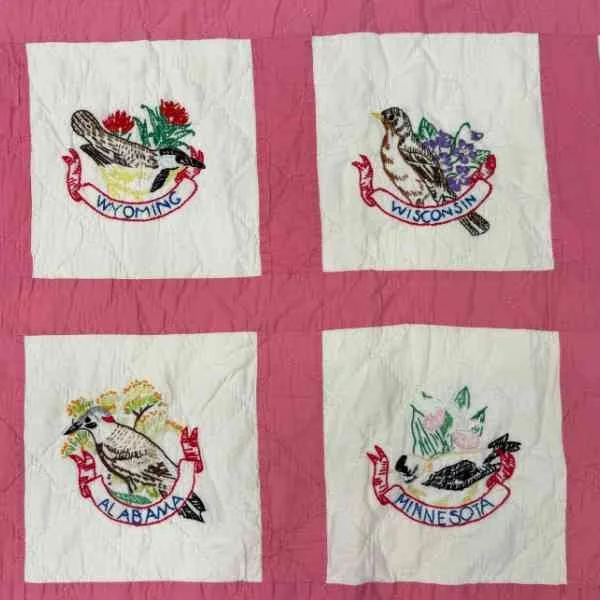
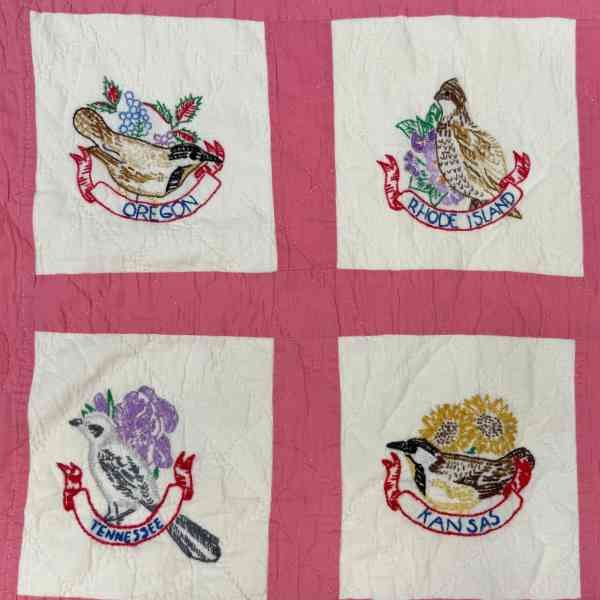
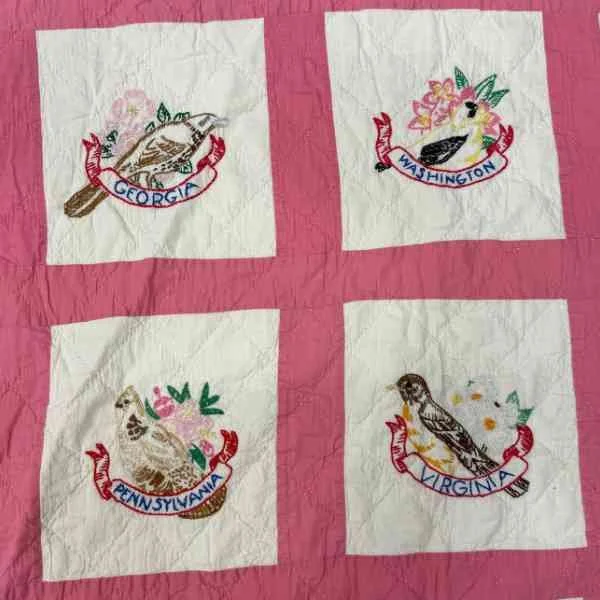
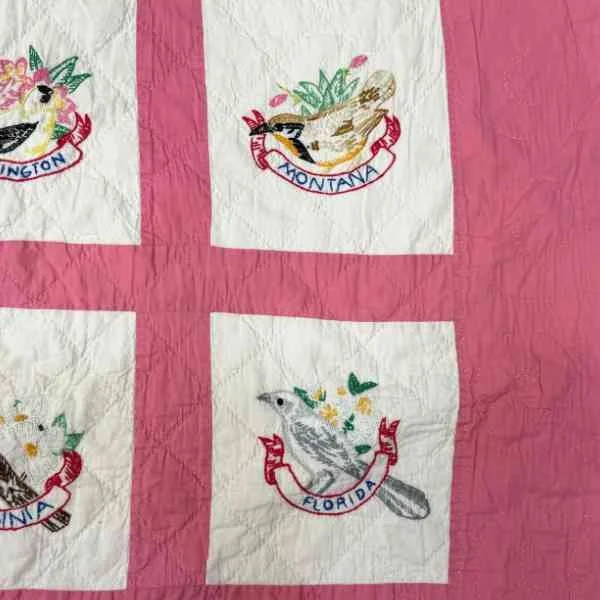
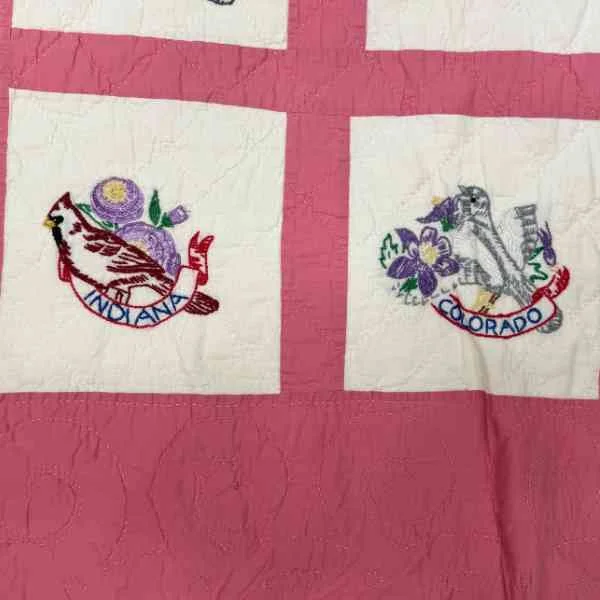
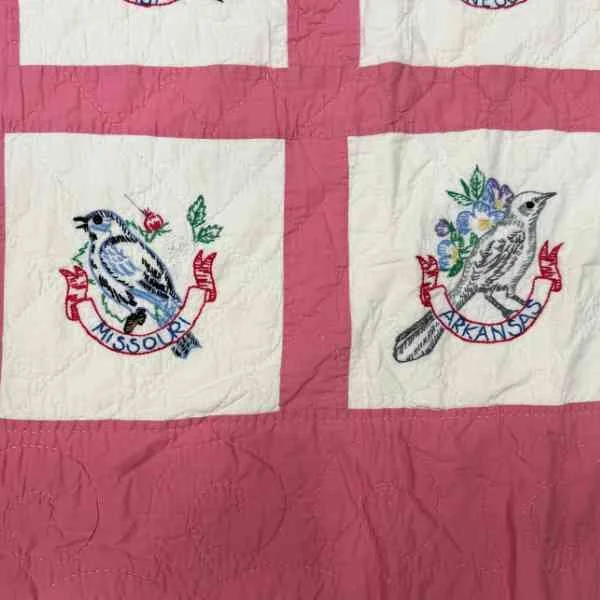
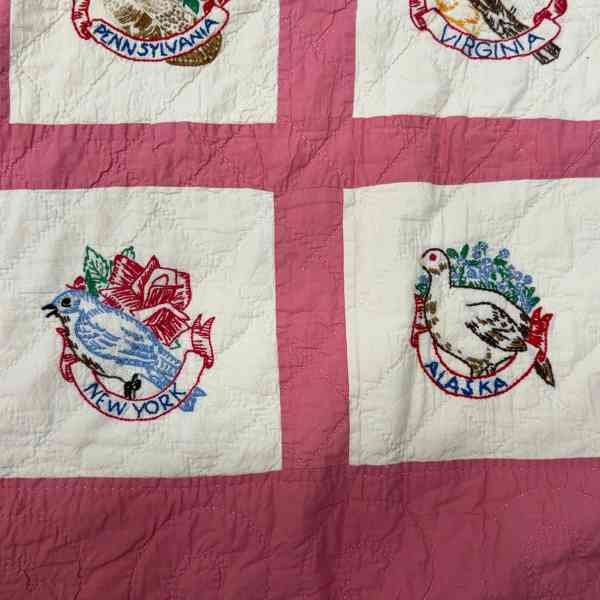
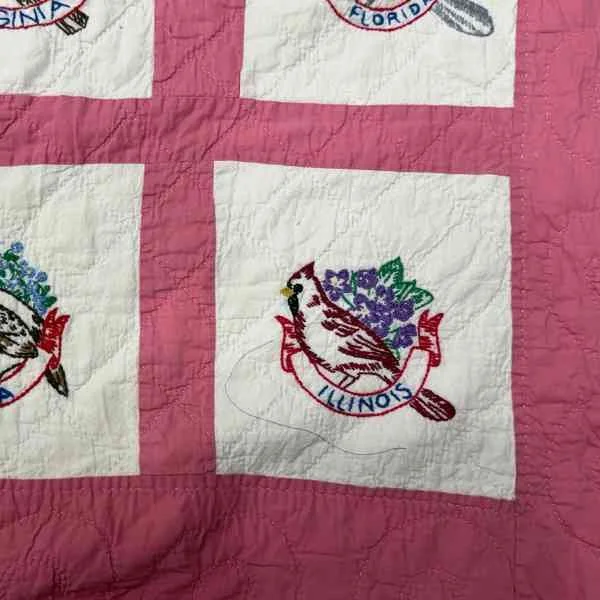
This quilt includes 49 hand-embroidered state blocks that include the state name on a ribbon banner, the state’s flower, and the state’s bird. Each embroidered block is 7” square. The sashing that is between the blocks and the rows is 2” wide and frames the blocks nicely. The borders are each 7” wide. The backing is also the bubblegum pink fabric like the sashing and the borders. Inside this quilt is a cotton flannel fabric, possibly a sheet, that adds to the softness of this quilt.
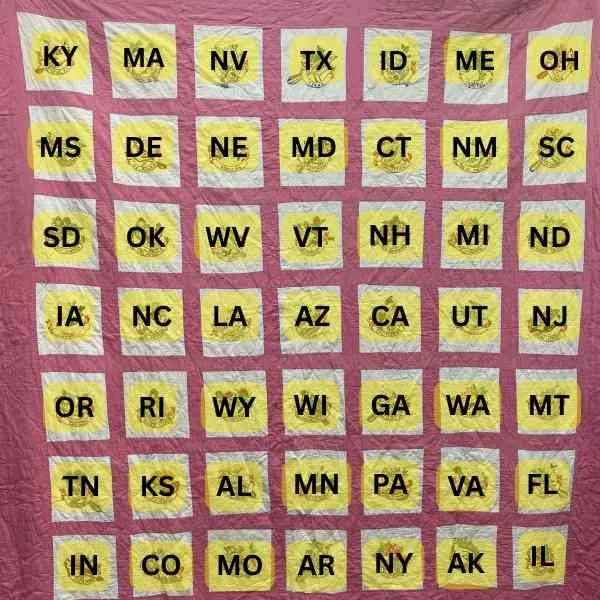
States Represented
There doesn’t seem to be a particular order to how the blocks are arranged in this quilt, or at least not an order I can figure out! My best guess is that the maker put these together randomly, but I could be wrong. What do you think the order could be? I would love to hear your theories!
Dating This Quilt (Continued)
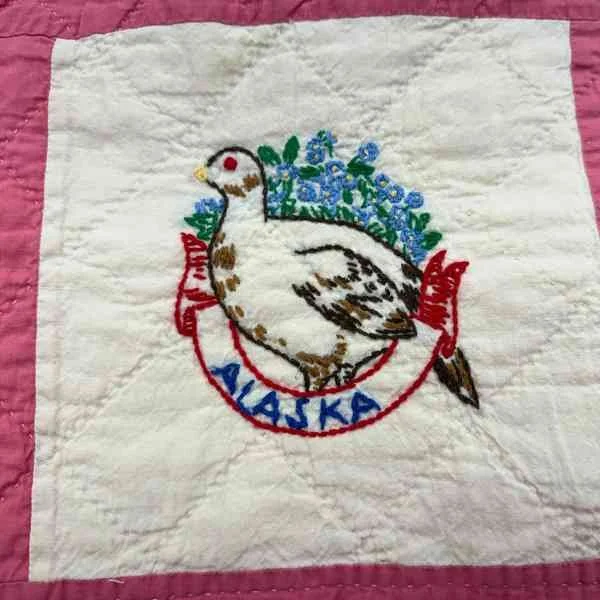
You can imagine how excited I was when I realized that Alaska is included, but Hawaii is not! Nothing against Hawaii, of course, but as a collector, I love that this helps me date this quilt, at least some, right?
Alaska became a state on Jan. 3, 1959, while Hawaii became a state on Aug. 21, 1959. Since Alaska is included, but Hawaii isn’t, my guess is that the block patterns were offered leading up to January 1959. Since this is a 7x7 layout (seven blocks in each of the seven rows), the math works out well. Could the maker have excluded Hawaii on purpose for ease of construction? Or was Hawaii not added this year? I have so many questions about this! What are your theories?
Embroidered State Blocks
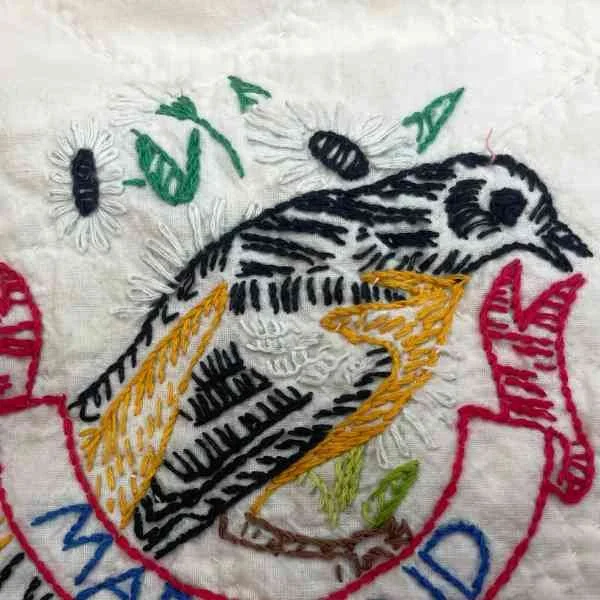
Each block has the state flower and state bird at the time, with some changes being made to this in the years to come. For example, Alabama’s flower was goldenrod and was changed to camellia in 1959. This is another way that helps date this quilt.
Another cool feature about these blocks is you can see the embroidery placement lines in blue (could this be an iron-on transfer?) under each of the blocks, as shown here. Embroidery patterns like these were offered in newspapers and other periodicals, with a different pattern coming out each week, month, etc. depending on the publication schedule. Iron-on transfers were also offered by mail.
Quilting
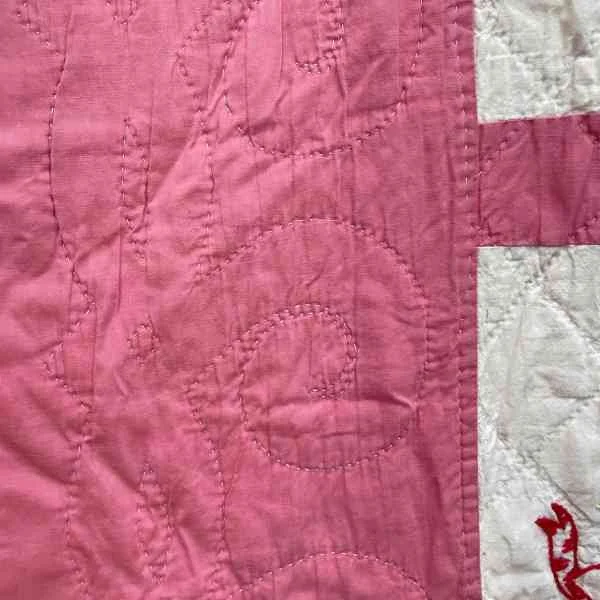
The maker of this quilt used a cross-hatch hand quilting method in the body of the quilt (over the state blocks), while adding a wave motif quilted into the borders. I love this! To me, it reminds me of the song America The Beautiful, with the line “…from sea to shining sea…” being represented. The hand quilting is even and beautifully done. It adds a wonderful texture to this quilt.
Finishing Technique
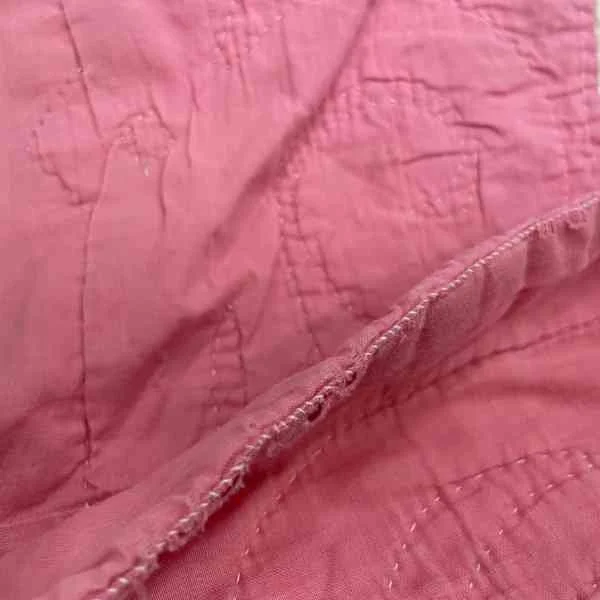
The maker used a knife-edge binding technique, where the raw edges of the quilt top and backing are turned inward to face each other, completely enclosing the batting, and then stitched closed along the very edge.
Unlike a traditional double-fold binding that adds a separate strip of fabric around the perimeter, a knife-edge finish creates a crisp, clean, and seamless boundary. In the case of this quilt, the maker achieved this look by bringing the pink backing fabric and the embroidered top together, hiding the seam allowances inside, and securing it with tidy hand stitches. It gives the entire piece a beautifully flat, tailored frame that doesn't distract from the gorgeous border quilting.
Condition
This quilt is in great condition except for the top of the quilt. This makes sense since this is most likely the area that has the most wear. As. you can see, the fabric is coming off of the top of this. I believe it can be repaired, however, using the same knife-edge binding technique that the original maker used.
Lessons We Can Learn
What can we, as modern makers, learn from this old quilt?
No Order? No Problem: We often spend so much time overthinking the "perfect" arrangement for our quilt blocks, agonizing over color placement and balance. But this quilt is a beautiful reminder that sometimes, random is best! The maker likely laid these out without a strict formula, yet the final result is absolutely cohesive and stunning. Trust your gut, let go of the pressure to be perfect, and remember that a finished quilt with a few "random" blocks is always better than a perfect project stuck in a closet.
Sashing Is Off. Who Cares?: If you look closely, you’ll see that the sashing intersections and corners don't line up perfectly across every single row. And you know what? It doesn't take away from the beauty of this heirloom one bit. In our modern quilting world, we can get so caught up in matching points perfectly that we lose the joy of the process. This quilt proves that minor imperfections fade into the background when the whole piece comes together. Let's give ourselves permission to embrace the "made by hand" charm!
You Can Get A Lot Accomplished Over Time: Forty-nine intricately hand-embroidered blocks is no small feat—that represents dozens, if not hundreds, of hours of steady work. It's easy to look at a massive project and feel overwhelmed before we even begin. But this piece is a testament to the power of consistency. Whether the maker worked on one block a week or just stitched for a few minutes a day, those small moments added up to a spectacular masterpiece. Break your big projects down into bite-sized pieces; you'll be amazed at what you can finish over time!
Knife-Edge Binding Technique:You don’t always need to cut extra fabric strips to give a quilt a beautiful, professional finish! A knife-edge finish proves that working with what you already have by simply turning the edges of the top and backing inward and can create a wonderfully clean, tailored boundary. It’s a fantastic technique to keep in your quilting toolkit for modern, minimalist designs, seamless wall hangings, or when you want your border quilting to truly take center stage without distraction.
Stunning Quilting Mixing Elements: I love how the maker chose a structured, geometric cross-hatch for the center blocks, but transitioned to a wave motif for the wide borders. It’s a brilliant design lesson in contrast! Mixing geometric lines with soft curves adds an incredible layer of visual interest and texture to the finished piece. Next time you're planning your quilting design, don't feel locked into just one overall pattern. Try mixing different elements to give your project a unique, customized look, especially one that is a nod to the overall quilt, like this!
Thank you so much for reading about this beautiful old quilt.
Kris