Lessons from an Old SUPER Scrappy Quilt Top
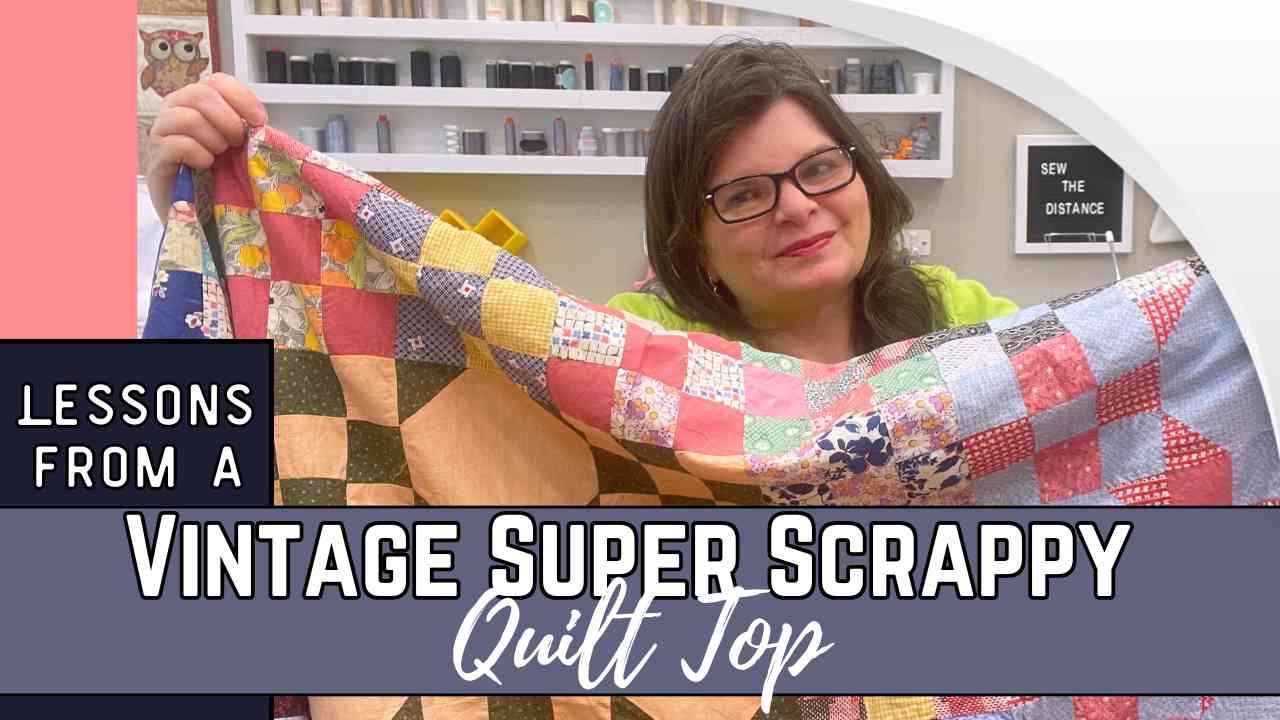
To watch the video, click HERE or on the image above.
About This Old Quilt
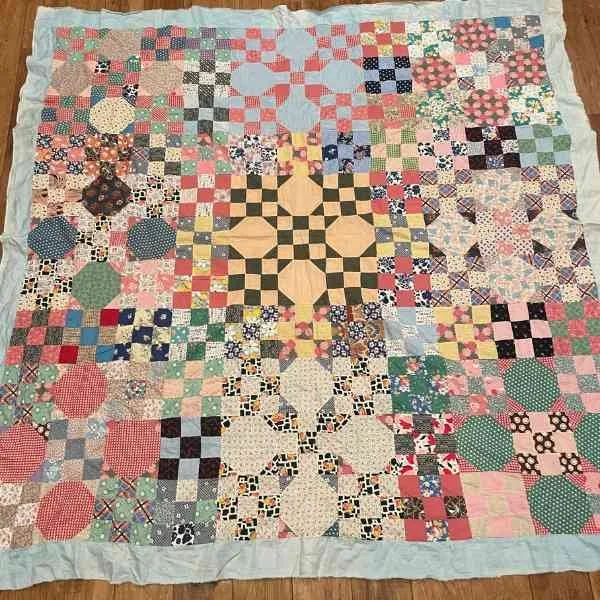
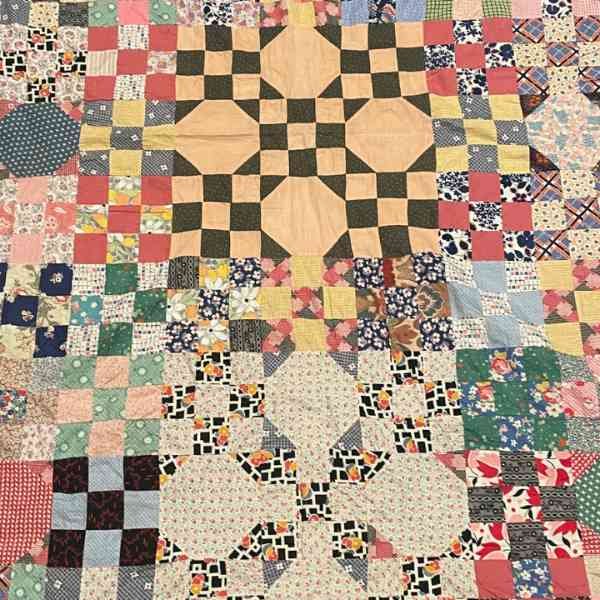
How fun is this vintage quilt top? It is bright, happy and fun! This maker used two different blocks to make this quilt top. Together they form a wonderful secondary pattern. It is obvious by looking at this beauty that the maker used what they had. There is a mix of prints and solids, textures and tones, so much to talk about this quilt! Let’s get started!
Details-At-A-Glance:
Size: Approximately 65” x 65”
Age: My guess is around the 1940s
Acquired: A friend gave this to me. She purchased it at a consignment shop.
Quilt History: unknown
Number of Blocks: (95) 9-patches and (36) snowball blocks
Number of Pieces: 499
Sashing: none
Cornerstones: none
Borders: 3.5” blue borders
Construction Technique: machine
Fabric: All cotton
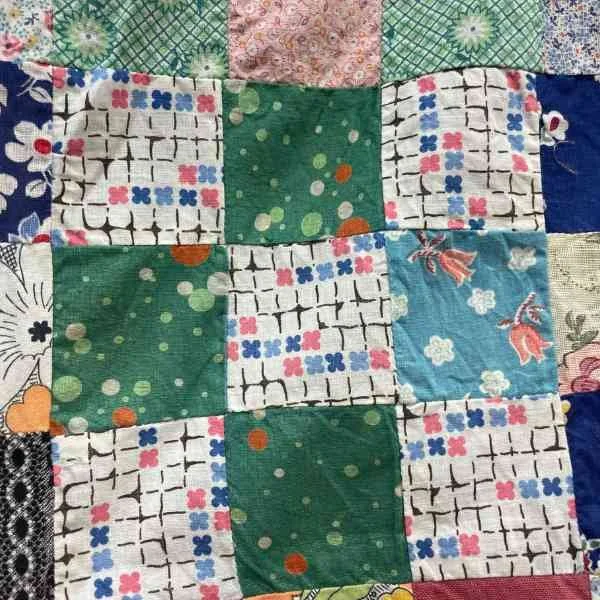
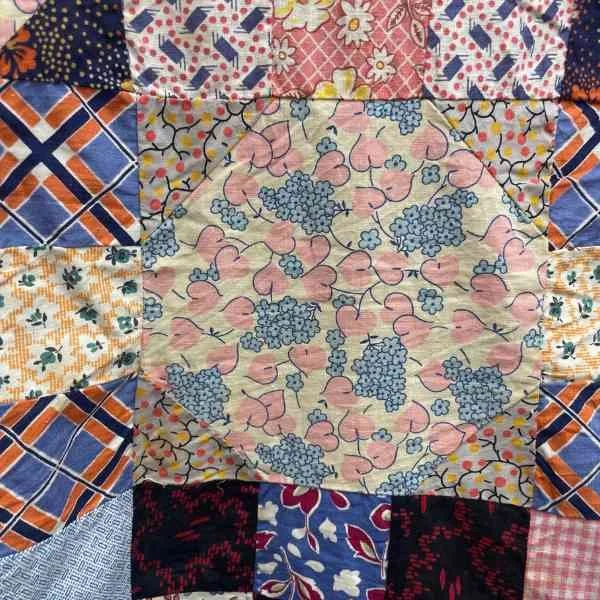
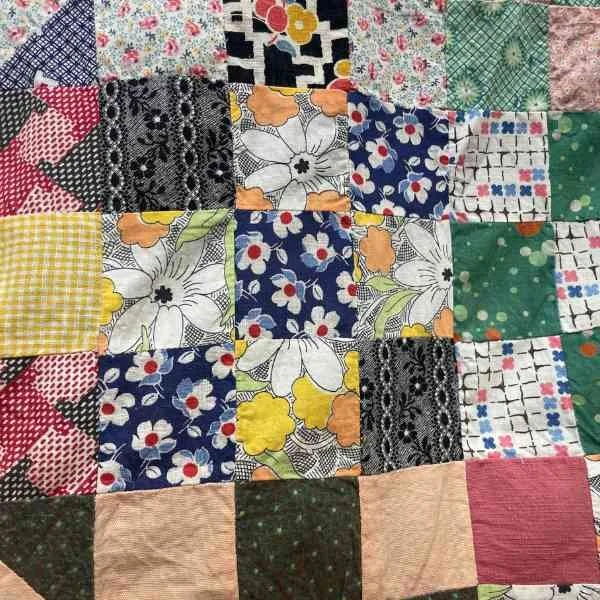
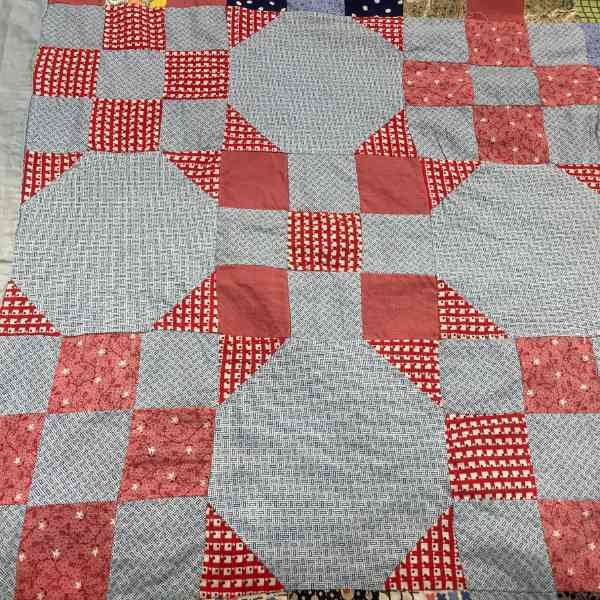
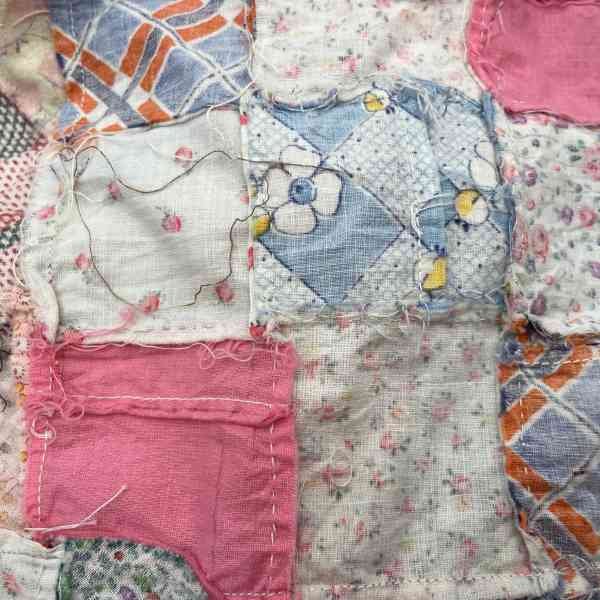
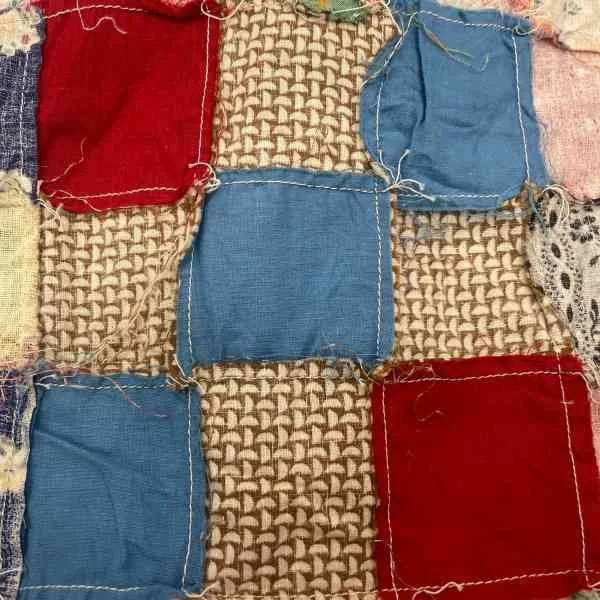
Blocks
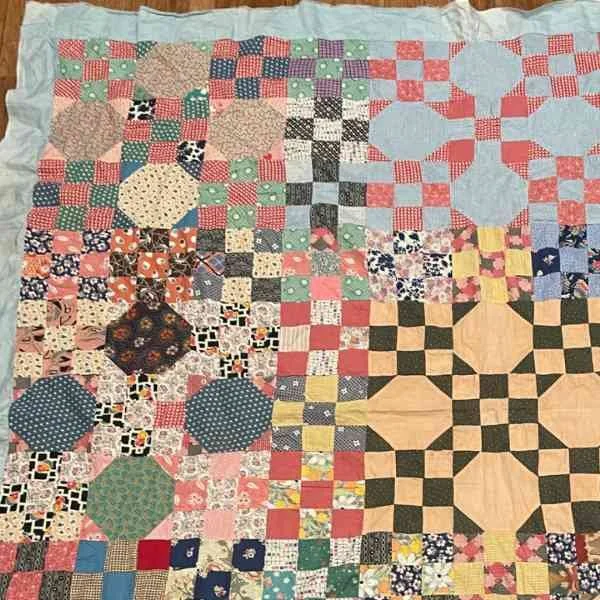
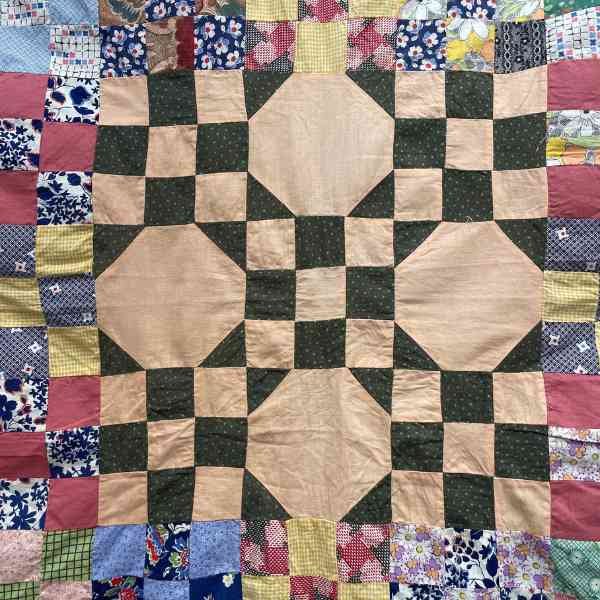
This quilt is made up of two different, yet simple, quilt blocks that offer a wonderful secondary pattern. There are (95) colorful 9-patches and (36) snowball blocks. When they are put together, they form a chain in a way that runs through the quilt top. The blocks are approximately 5.5” finished (some are bigger and some are smaller).
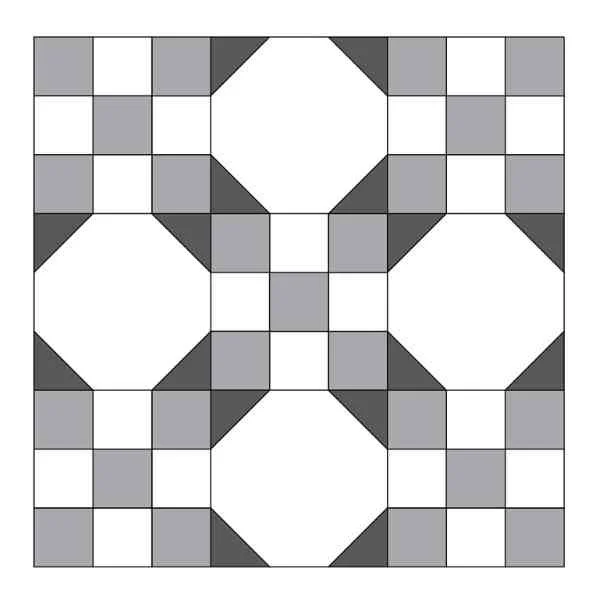
Secondary Pattern
Because it is tricky to see the pattern in the quilt, I made some graphics to help us see the complete pattern. When the 9-patch blocks come together with the snowball blocks, we can see the wonderful secondary pattern. In this quilt, the secondary pattern does get a little lost in the blocks, but it is still there nonetheless. The maker (or makers possibly) used additional 9-patches to create sashing units between the larger cluster of blocks.
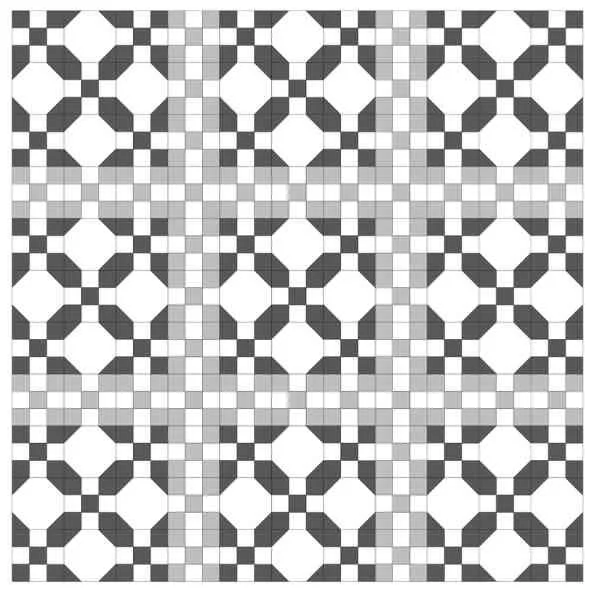
Blocks & Sashing
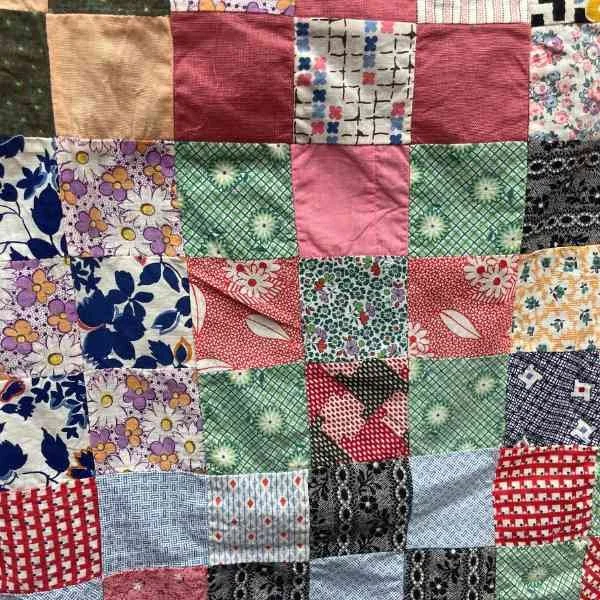
Scrappy nine-patches are also used for sashing, which adds to the overall eclectic design of this quilt. Forty of the 95 nine-patches are in the border while 40 are in the block. Since they are so scrappy and colorful, it is hard to see these in the quilt, but they are there.
Fabrics
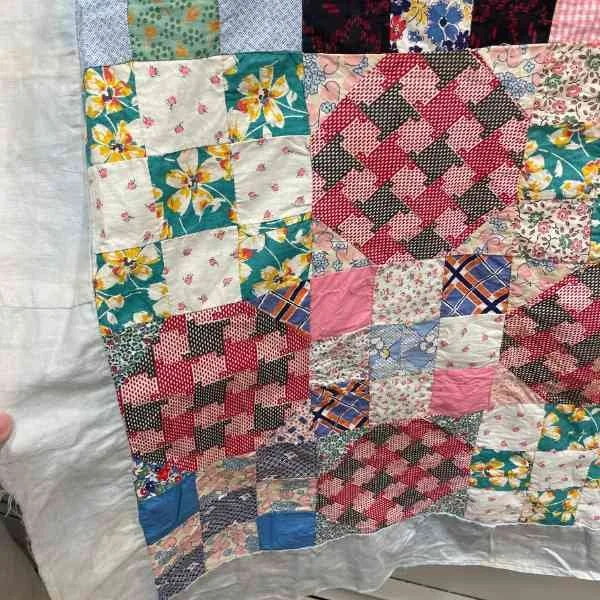
These fabrics! Ohhhh my goodness! I just love looking at them! There are plaids, florals, stripes, and more. Most of the fabric is the same weight of cotton fabric with the exception of one heavier fabric. This doesn’t seem to affect the stability of the quilt, however.
Multiple Makers
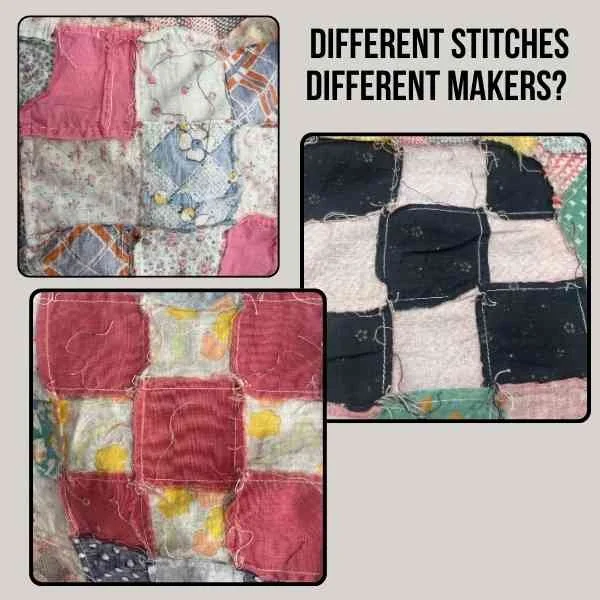
Although I love old quilts that are finished, one really nice thing about vintage quilt tops that aren’t finished is that we can look at the back to see how it is constructed, giving us even more insight to the quilt and more lessons to learn. Upon closer examination, it appears that different makers made the blocks. This is just a theory, however, and I could be wrong. A few of the clues that make me think this is that not all of the stitches look like they are made by the same machine. Also, two blocks are hand-pieced.
Lessons We Can Learn
What can we, as modern makers, learn from this old super scrappy quilt?
Combining Blocks: I love how this maker combined two simple blocks (9-patch and snowball) to make a secondary pattern that looks so much more intricate than it is. This is a great reminder to us, as modem makers. We don’t have to go crazy with elaborate designs to have an effective and beautiful quilt.
(Mostly) Contrasting Fabrics: We have to remember, of course, that the maker (or makers) most likely had a limited amount of scraps to pick from when making this. BUT looking at it from our point of view as makers with a huge assortment at our fingertips, we can learn from these colors and design choices.
Close Enough Points: Sure, the points are always exactly on. So what? The overall pattern is still there! As modern makers, we can learn from this. At least I can. Maybe you can, too.
Busy Quilts = Cool Quilts: Busy Quilt = Cool Quilts: Even though it is tough to see the overall pattern, this quilt sure does offer interest! I could look at these fabrics all day and still not see all of the cool features. From stripes to plaids and everything in between, this is a fun one, for sure!
Blocks as Sashing: This makes me wonder if this was intentional or if the maker(s) just wanted to use all of the blocks. Or even if they had to use all of the blocks. I love thinking about this. For whatever reason, nine-patches are used as sashing. This is definitely an idea we could bring into our own quilts.
Thank you so much for reading about this beautiful old quilt.
Kris